Dangers of Lake and Pond Erosion
Some of the dangers of erosion include safety concerns, land and property loss, liability, non-compliance issues, structural damage, and detriments to lake health. All of these dangers are the same throughout the state of Florida, except for non-compliance issues which can vary city by city and county by county. Below we will discuss non-compliance issues that apply specifically to south Florida and some gulf-coast counties in south Florida. If you live outside of these areas, you’ll want to consult with a local engineer or attorney to find out what needs to be done to keep your waterbodies in compliance.
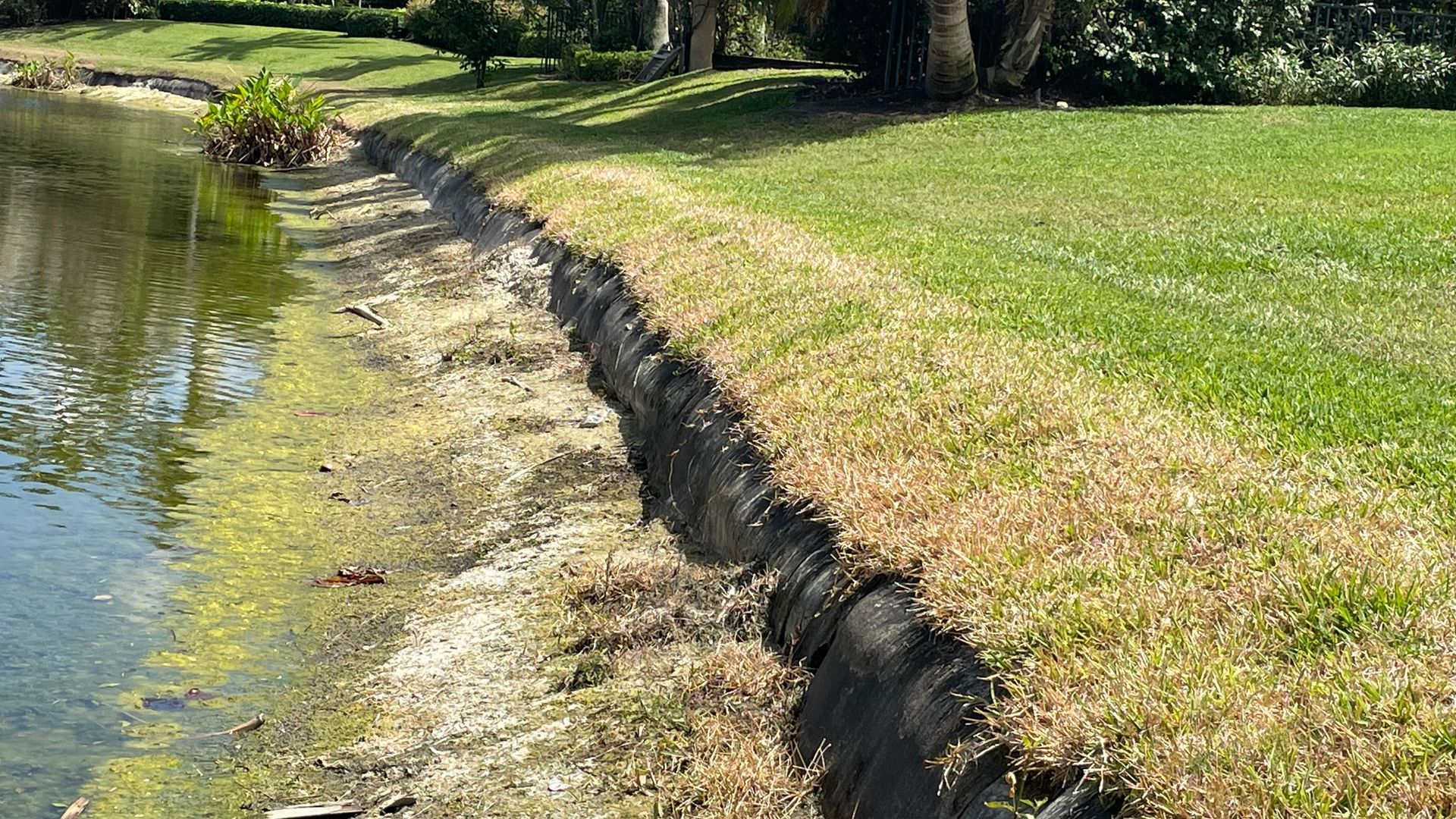
Safety concerns are the most important factor when it comes to erosion control and are the impetus for the creation of compliance rules, laws, and regulations. When a shoreline becomes eroded it poses a danger to people, pets, and lawn care workers. There are cases of lawn care workers tragically falling into a lake with their equipment pinned on top of them leading to drowning and death. This can be avoidable! The biggest danger to lawn care personnel (as well as others) is “spongy sod” that appears healthy from above, but has no soil base underneath it due to hidden erosion. These areas lead to trips, falls, and stuck lawncare equipment and they are often up on horizontal land, not on the shoreline. The drop-off on the shoreline is called an escarpment. A moderate to severe escarpment poses a danger of falling and injury. Additionally, erosion can cause the slope of the back yard or property to become steep which makes it difficult to walk on or navigate equipment safely. Both the escarpment and slope must be addressed in order to prevent potential injury.
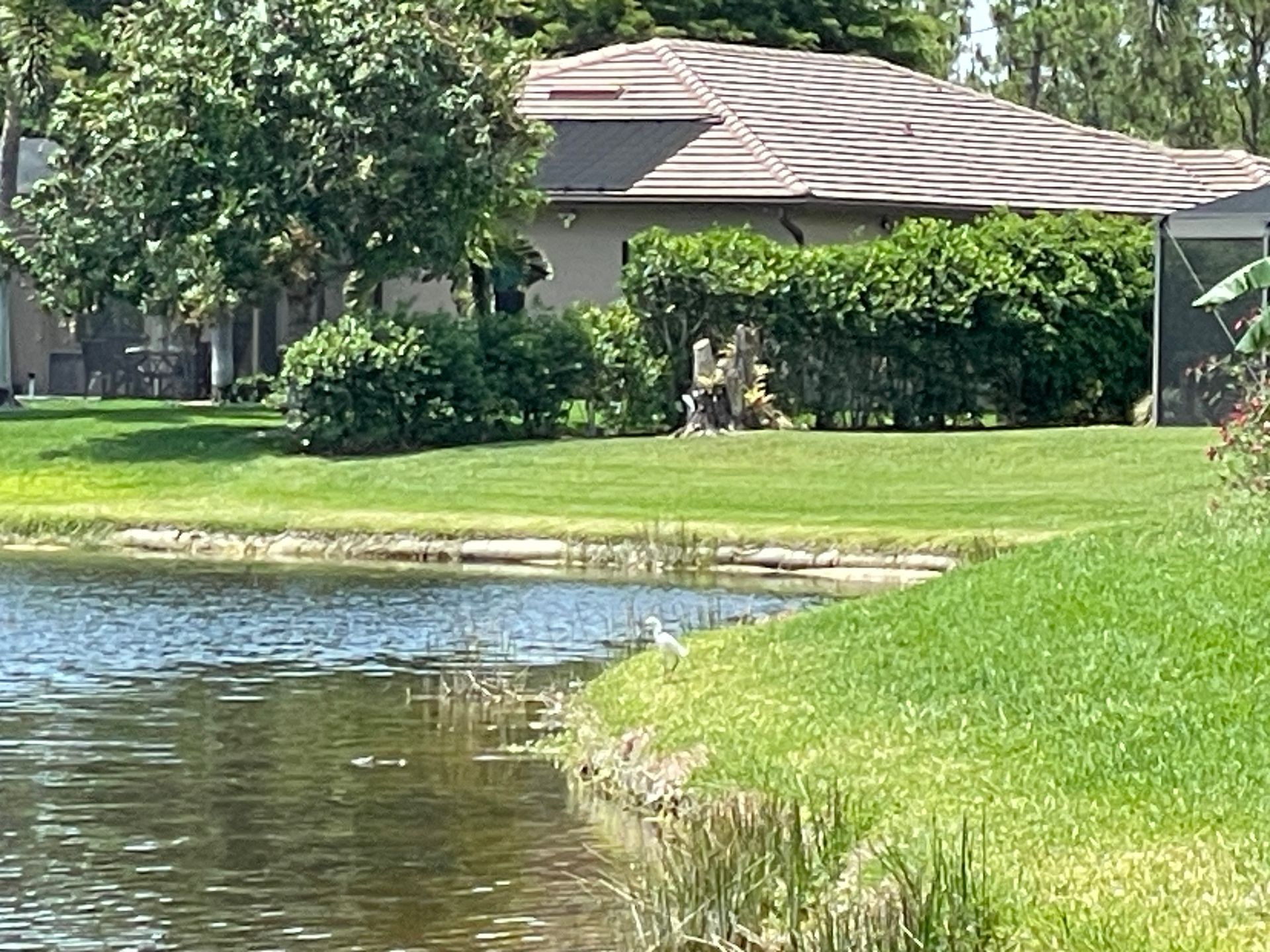
Land and property loss occur when erosion is left unchecked. Many residential properties in south Florida that are 10-20 years old have upwards of 8 to 10 feet of land loss adjacent to the shoreline! This land loss is always within the lake bank easement, but nonetheless is private property that the homeowner paid good money for! Stabilizing a shoreline is ALWAYS less expensive than fully restoring lost land and THEN stabilizing the shoreline to ensure the restoration is permanent. Unfortunately, builders in Florida are typically not required to harden or permanently stabilize the shoreline around a pond or lake when they build it which subjects the shoreline to pernicious erosion over time.
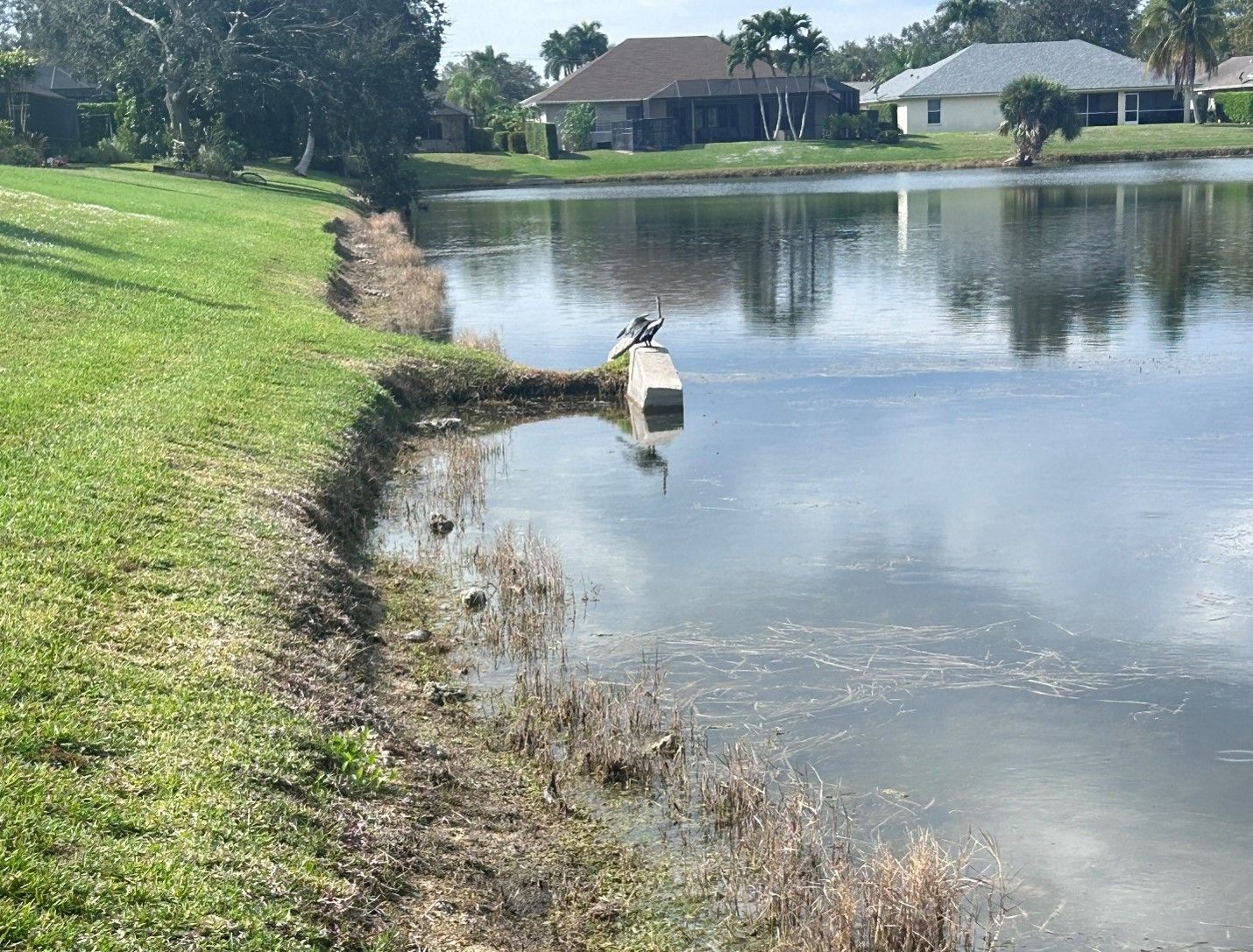
Above Picture: Severe land loss from erosion at a community in north Naples, Florida. The homeowners’ properties originally extended all the way to the concrete headwall with the bird perched on it! The headwall is about to detach from the pipe and fall into the water which will require an excavator or crane to repair.
Liability is also a major concern of planned communities, HOA’s, and homeowners when it comes to escarpments, slopes, and land-loss. A slip or fall resulting in an injury could lead to a lawsuit against the culpable parties if it is determined that something should have been done about the unsafe conditions. In addition to liability for injuries or death, there is also liability for structural damage to hardscape, pool decks, and foundations which can bear a 6-figure cost to remediate in some cases. It is almost always less expensive to address the erosion than to have to pay out attorney fees, court costs, and settlement amounts later on!
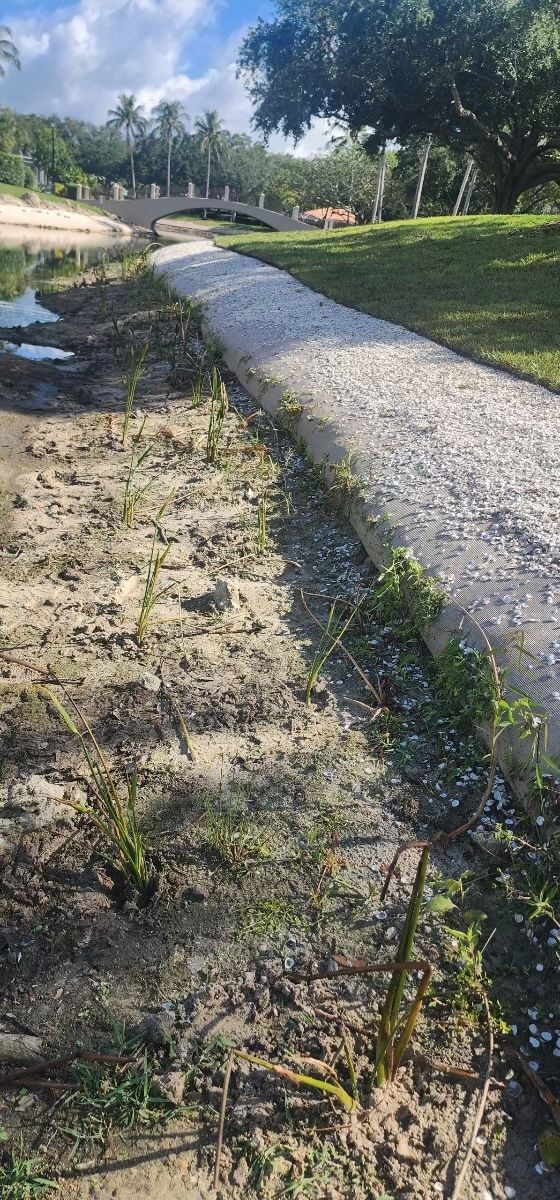
Non-compliance issues have to do with the original set of specifications/standards that were put in place when a property or community was originally built. Here in Florida, the Water Management District is a state-agency that has purview over all bodies of water in the state, whether natural or man-made. They have a set of standards that must be adhered to. In south and southwest Florida “The District” prefers escarpments to generally be under 9” (nine inches) from the sod to the lake bank. Also, the slope on a man-made pond or lake bank must be at 4:1 (4 feet horizontally for every 1 foot of vertical drop) in most cases. In recent years, new construction development codes call for a 6:1 slope which is even flatter and safer. The District also has criteria for how many littoral plantings each lake or pond must have and maintain. Lee, Collier, Charlotte, Sarasota, and Manatee counties each have further regulations on escarpment, slope, and number of littoral plantings but they all generally follow The District on these regulations.
Structural damage occurs when a home, pool, deck, or other hardscape is built close to the lake and the lake experiences severe land loss. This causes the soil under the structure to soften and relax which compromises the structure and leads to cracking and settling. At the end of the day, an investment of tens of thousands of dollars could have prevented a repair in the hundreds of thousands!
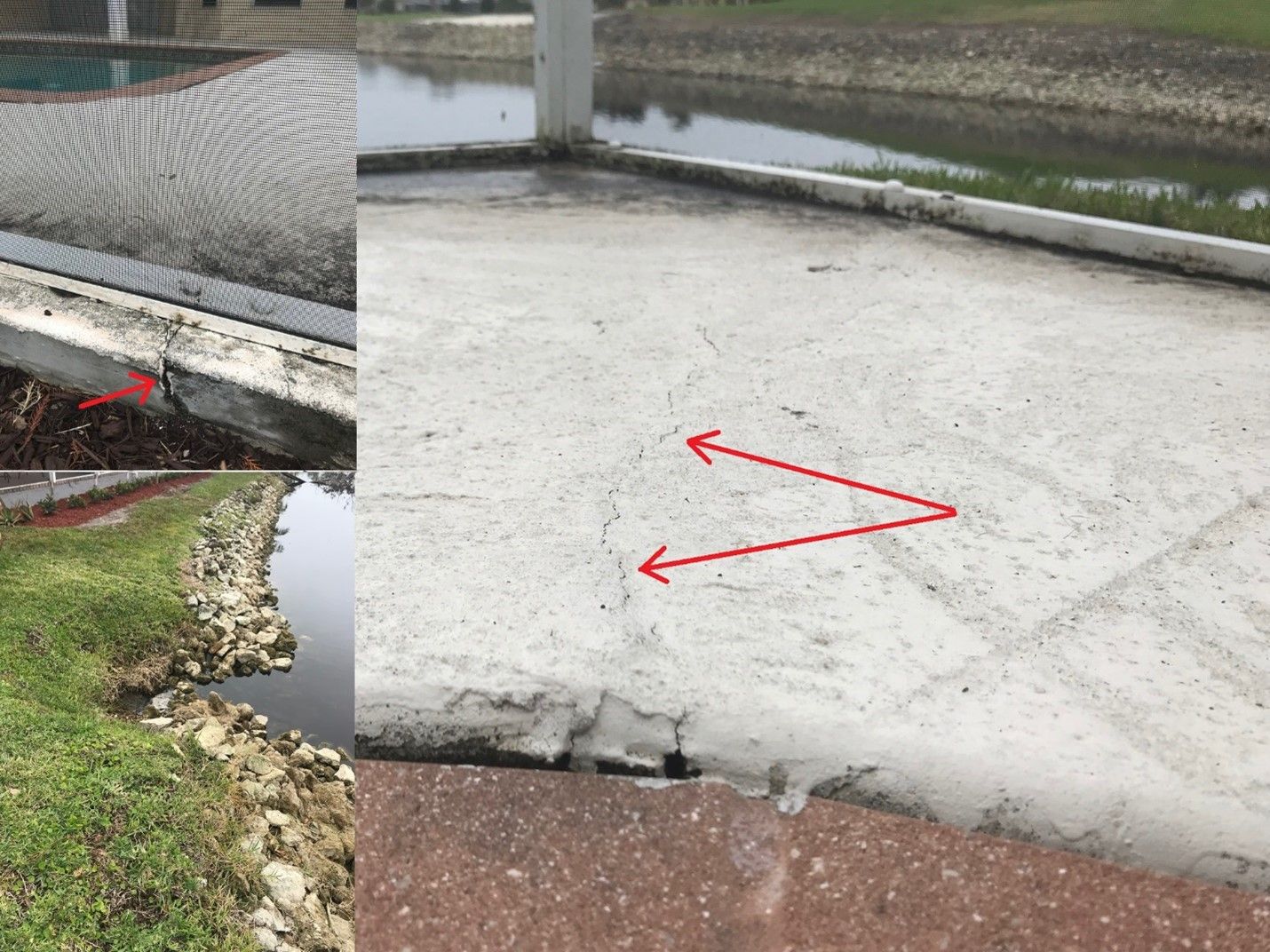
Above Photo: A documented stress crack in a pool cage caused by severe erosion on the adjacent lakeshore. Bonita Springs, Florida. Note that the rip rap on the shoreline failed likely because it was installed by an inexperienced local lawn care company and not by a licensed marine contractor.
Detriments to lake health from erosion-related damage include a change in water pH, habitat loss for the native fauna, reduction in the native flora, excessive algae blooms, altered water temperature, and reduced stormwater collection functionality. We have witnessed a lake in Naples, FL that started as one lake and split into two lakes due to excessive erosion in the center causing a sand bar and subsequent plant growth and colonization. This type of damage usually must be repaired by de-watering the lake, excavating the material, and re-grading the shoreline which can cost hundreds of thousands of dollars!
Erosion is insidious in that it occurs slowly, over time. It is often the most overlooked and least budgeted-for item in a planned community or development. It doesn’t have to be this way! The state of Florida needs to step up to the plate and correct its development codes to address the issue early on so that all bodies of water can be secured against erosion for the long-term and so that we can enjoy a more natural, healthy, and more beautiful environment in the Sunshine State!
Recent Posts