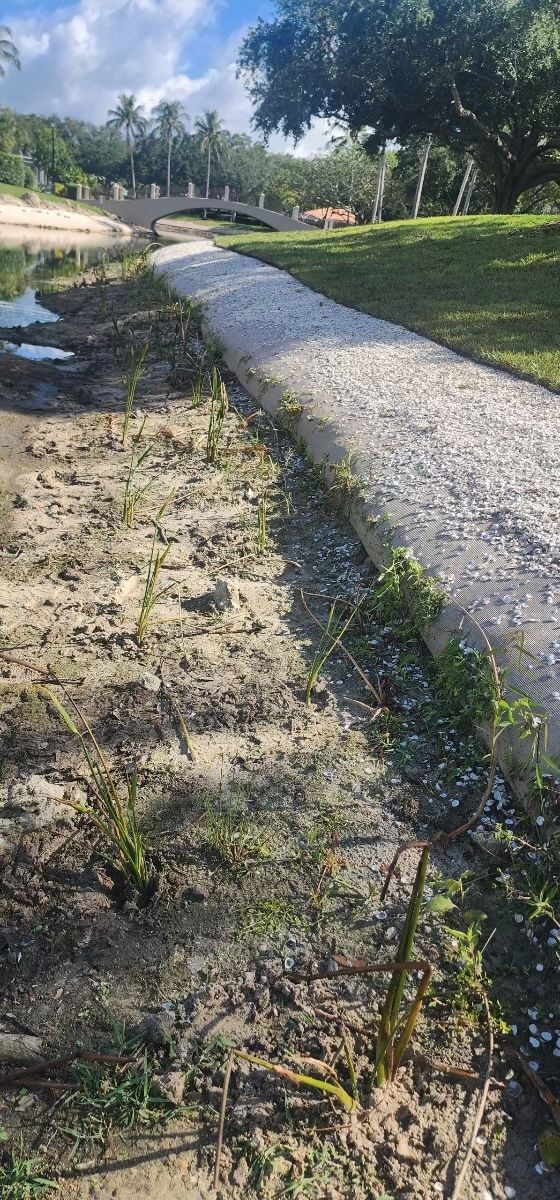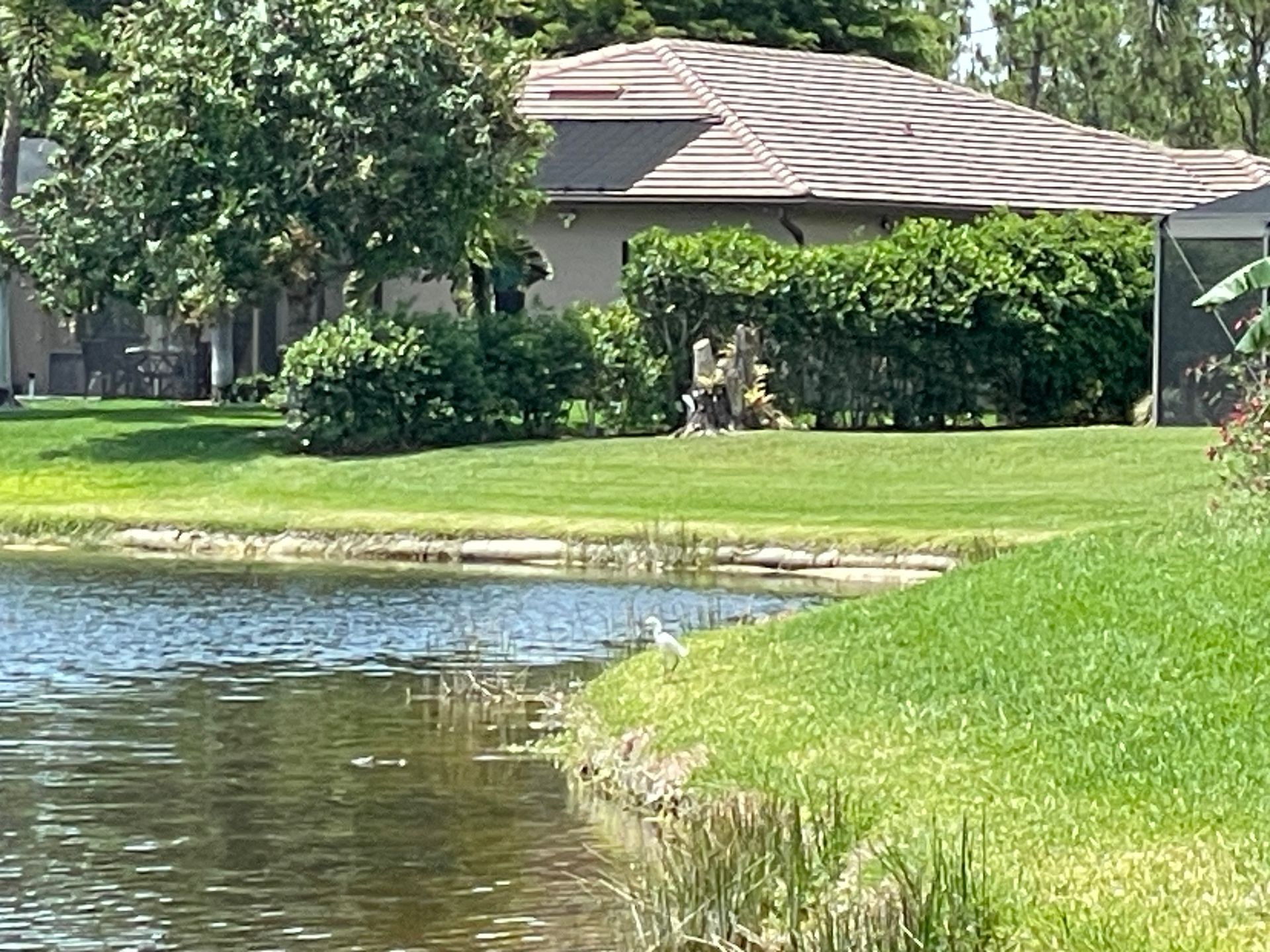
Water Velocity

Water velocity, as it pertains to erosion, is the measure of moving waters effect on the hard surfaces it comes into contact with.  Water velocity on a river or stream is much higher than water velocity on a standing body of water such as a lake or pond.  It can also be taken into account when measuring sheet flow erosion and its effect on horizontal surfaces such as banks and shorelines.  Here, the water velocity is very low, but the actual water affects a larger area of land.  As water passes by a hard surface, it creates friction and turbulence which agitates the surface and can break free fine particles in some cases, taking the particles with it.  The higher the water velocity, the more particles it can detach and carry away.  Conversely, little to no water velocity will have very little effect on the hard surface.  Water flowing quickly along a sandy shoreline will cause immediate erosion whereas water sitting in a retention pond with little movement may saturate the hard surface, but will cause much less erosion.


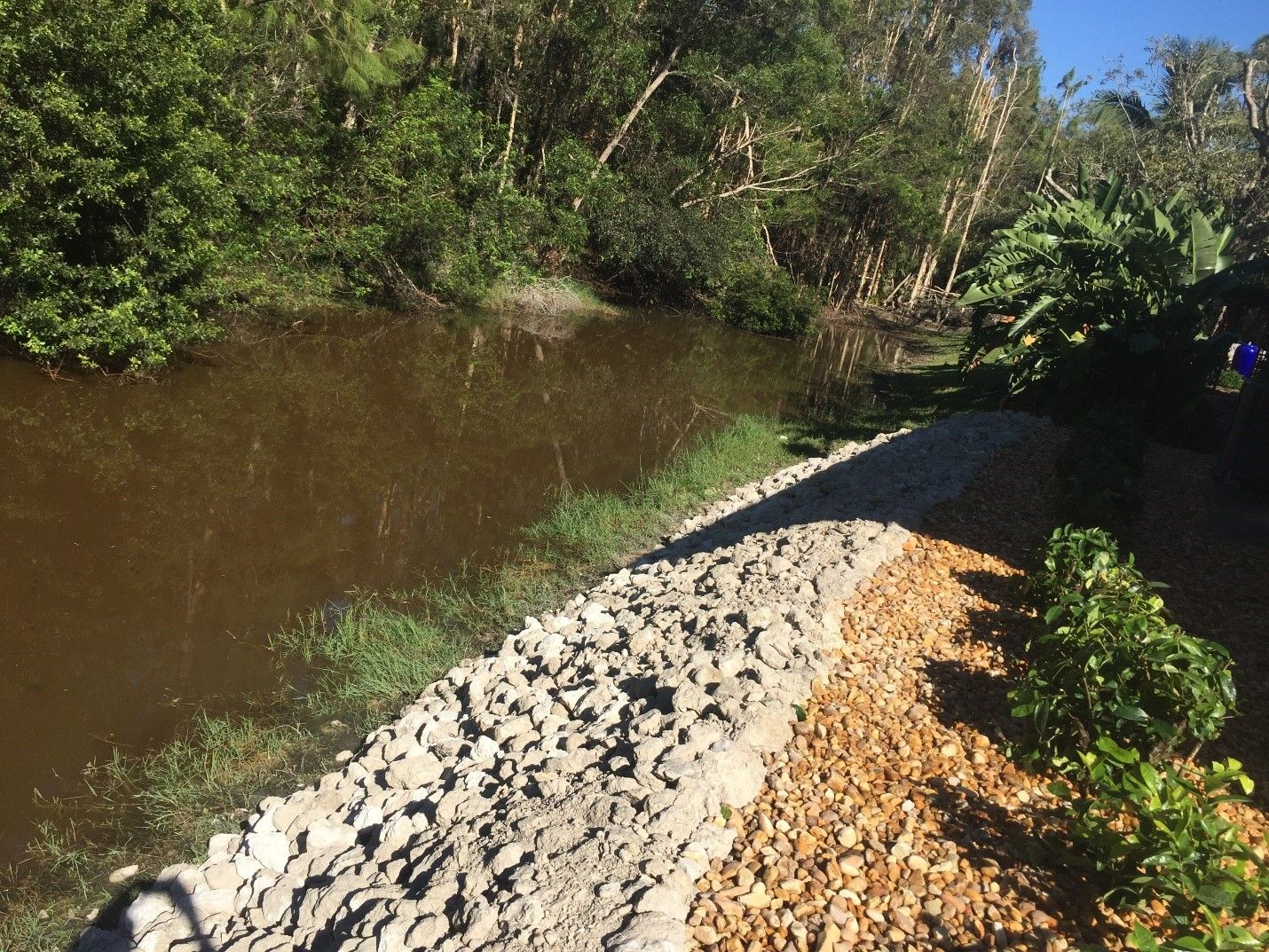
For rivers and streams, it is important to help reduce erosion by hardening the shoreline so that the flow of water has less effect on causing erosion.  This can sometimes be rock, boulders, Turf Reinforcement Mat, seawalls, sheet pile, bulkhead, or other methods.  These structures help buffer the effects of flow, tide, and wake from boat traffic.  Navigable waterways are ones that allow for boat or vessel traffic.  Non-navigable waterways are ones that do not experience boat traffic.  So, factors such as these must be taken into account when planning for erosion control systems along a shoreline or bank.
Water Velocity

Above Picture: Shorelines along canals that have moving water should be hardened with rip rap rock or similar aggregate.


For lakes, ponds, and preserve areas, erosion control methods have more to do with the slope and the water’s interaction with the environment around it (called Hydroecology).  On these bodies, other factors such as wave action, fluctuating water levels, and rill erosion are more prominent than actual water velocity.


Civil engineers and environmental engineers can usually provide a study or assessment on how water is affecting your shoreline or lake bank.  Some tools can be used to provide these measurements.  Otherwise, it is typically easy to see visually how a surface is being affected and then engage a professional to determine a solution.

Recent Posts
By Seabreeze Lake Maintenance December 23, 2025
How Seabreeze Lake Maintenance Uses Professional Dye Applications to Improve Water Quality, Reduce Algae, and Enhance Lake Aesthetics
By Seabreeze Lake Maintenance December 20, 2025
Littoral planting—restoring a pond or lake’s shoreline with native aquatic plants—is one of the most powerful ways to improve water quality, stabilize banks, reduce algae, and enhance the natural appearance of a waterbody. A well-designed littoral zone transforms an ordinary retention pond into a thriving ecosystem that benefits the entire community. At Seabreeze Lake Maintenance , littoral restoration is more than just a service—it’s a core specialty. We are dedicated to rebuilding native shoreline habitats using plants that are scientifically proven to strengthen banks, clean the water, and support fish and wildlife. Our projects consistently produce healthier, more attractive waterbodies that require less chemical use and long-term maintenance. This article explains what littoral zones are, why they matter, and how Seabreeze leads the industry in shoreline restoration and planting. What Are Littoral Zones? Littoral zones are the shallow edges of a pond or lake where sunlight easily reaches the bottom, allowing aquatic plants to grow. These zones are the natural backbone of a healthy waterbody. Functions of a Proper Littoral Zone Stabilizes the shoreline to prevent erosion Absorbs excess nutrients that fuel algae growth Provides habitat for fish, frogs, and beneficial insects Improves water clarity by reducing sediment suspension Filters stormwater runoff before it enters the pond Adds natural beauty with vibrant native vegetation Without plants, ponds begin to fail—shorelines erode, sediment builds up, algae increases, water quality declines, and maintenance costs rise.  Littoral plants are not decoration—they are essential water-quality tools.
By Seabreeze Lake Maintenance December 20, 2025
Decorative fountains are more than just eye-catching additions to a landscape—they play a crucial role in water circulation, oxygenation, and aesthetic appeal. From HOA entrance monuments to large community lakes, fountains create movement that prevents stagnation, supports aquatic health, and elevates the visual value of your property. At Seabreeze Lake Maintenance , we provide comprehensive fountain installation, maintenance, repair, and water-quality support for commercial properties, residential communities, municipalities, and private landowners. Our experience with aquatic systems, vegetation control, and aeration makes us uniquely equipped to keep fountains running smoothly while ensuring the water body they serve stays healthy year-round. This article explains the benefits of fountains, the types available, common problems, and how Seabreeze helps property owners maintain reliable and attractive water features. The Purpose of Fountains: Beauty Meets Function Fountains are often thought of as purely decorative, but their impact goes far deeper. When installed in ponds, lakes, or retention systems, they deliver essential environmental benefits. Aesthetic Benefits Enhances property value and visual appeal Creates a focal point for entrances, parks, golf courses, and communities Provides movement, sparkle, and sound that uplift outdoor environments Functional & Environmental Benefits Circulation & Oxygenation: Increases dissolved oxygen to support fish and beneficial bacteria Algae Reduction: Moving water disrupts surface stagnation Mosquito Control: Flowing water discourages breeding Odor Reduction: Reduces organic buildup and foul smells Water Stratification Prevention: Helps prevent temperature layering

CONTACT US TODAY

Schedule Your Consultation!


CONTACT US